Target Audience

I am going to do a Wedding Magazine. My magazine will focus on brides.

I was going to do a fashion magazine but I have now decided to do Wedding magazine.

The target audience is normally 25-45 aged women who are going to get married or thinking of getting married.

According To Research. The average age for Americans getting married has reached a historic high — 27 for women and 29 for men — a jump from the 1990 average marrying age of 23 for women and 26 for men. The graph bellow supports this.

_88183680_marriage_age_us_624

Image result for graph of age of people at 27

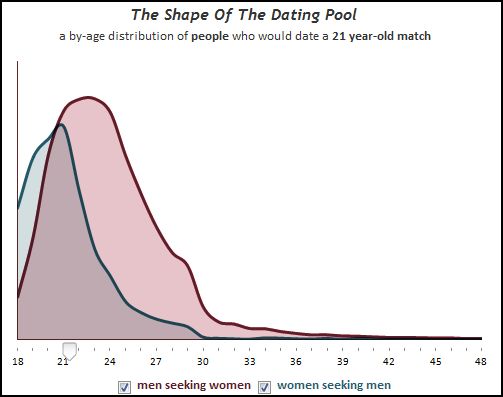
However due to the graph a lot of people at 21-27 are dating. Due to dating it shows that people will be thinking of marriage before the age of 27 and 29 and may buy wedding magazines when thinking

Image result for how many people get married v dont

As you can see 61% want to marry and 27% aren’t sure so may still buy wedding magazines to have a look.

ST_2014-11-14_remarriage-01

Four in ten new marriages involve remarriage so i will also include cover lines involving remarriage and not just first marriages to attract more people to buy

Coursework Research: Magazine Industry

How financially successful is the UK magazine sector of the UK publishing industry?
  •  The UK is a leading publisher of newspaper and magazine titles. The UK customer publishing industry is the most developed in the world and is worth over £1bn each year. There are over 3,210 consumer magazine titles in the UK, reaching 87 per cent of the total adult population. UK consumers will spend an estimated £2.5bn on magazines in 2013.
Which companies dominate the UK Magazine Industry?
  1. TV Choice                                                                    £18.00
  2. Whats on TV                                                               £26.50
  3. Slimming world magazine                                      £5.20
  4. Take a break                                                              £24.90
  5. Radio Times                                                               £44.20
  6. Cosmopolitan                                                             £6.20
  7. Woman’s Weekly                                                      £12.50
  8. Chat                                                                             £10.60
  9. Glamour                                                                      £2.50
  10. That’s Life                                                                   £8.00
How are magazines typically distributed in the UK?
https://en.wikipedia.org/wiki/Magazine – Website

There are 3 main ways that magazines can be distributed:

This is when the magazine is sold to readers for a price, either on a per-issue basis or by subscription, where an annual fee or monthly price is paid and issues are sent by post to readers. Paid circulation allows for defined readership statistics.

  • Non-paid circulation

This is when that there is no cover price and issues are given away, for example in street dispensers, airline, or included with other products or publications. Because this model involves giving issues away to unspecific populations, the statistics only entail the number of issues distributed, and not who reads them.

  • Controlled circulation

This is when the model used by many trade magazines (industry-based periodicals), where the magazine publication is distributed only to qualifying readers, often for free and determined by some form of survey. Because of printing and postage costs associated with printing and creating a magazine, publishers may not distribute free copies to everyone who requests one. This method and approach allows a Company to ensure that the key target audience are receiving their publication, ensuring that advertisements will be received by the advertiser’s target audience, and it avoids wasted printing and distribution expenses.

Infographic-2
How has digital technology affected magazine production and distribution?

The internet has changed the magazine industry in countless ways. From making content more instant and more accessible to forcing publishers to think outside the box, the internet has had an impact on content, style, quality and affordability.

In this digital age it is very convenience to be able to download digital copies of magazines. The ease, the speed, the convenience and lack of waste are all factors that will appeal to some whist others will still prefer to put down the tablet or phone or move away from the screen to physically enjoy the experience of flicking through a magazine.

There are also now ways to ‘subscribe’ to your favourite magazines through online websites, by paying a certain amount per month (Paid circulation), and you can get both an online, and printed copy sent to your home address.

  • Reduced circulation
  • Increased quality
  • Relevant content
THE UK HAS A LARGE MAGAZINE PUBLISHING MARKET
  •  UK is a leading publisher of newspaper and magazine titles. The UK customer publishing industry is the most developed in the world and is worth over £1bn each year.
  • There are over 3,210 consumer magazine titles in the UK, reaching 87 per cent of the total adult population. UK consumers will spend an estimated £2.5bn on magazines in 2013.

Figures show that in 2013 UK consumers spent an estimated two and a half billion on magazines and this is increasing each year, as there are more than 3,210 consumer magazines that reach 87% of the adult population.

  • Digital sales rose by 6 per cent to £1.7bn, despite a 3 per cent drop in eBook sales.
  • Physical sales were up by 8 per cent to £3bn, the highest level since 2012.

Overall academic and professional publishing was up by 10 per cent to £2.4bn

Which company / companies own and distribute magazines that are similar to the one you would like to create?
  1. Premier Bride – 450,000
  2. Wedding Style – 400,000
  3. Brides – 309,916
  4. Get Married – 300,000
  5. Town & Country Weddings – 250,000
  6. Inside Weddings – 240,000
  7. Martha Stewart Weddings – 220,833
  8. Bridal Guide – 161,954
  9. The Knot Magazine – 138,605
  10. Destination Weddings & Honeymoons – 100,000

These are the top wedding magazines and there websites hyperlinked


Preliminary Task Evaluation

1.How do your products use the codes and conventions of magazine covers and content pages?

Cover page: my cover page uses several conventions such as a masthead, main image in MCU and cover lines. The codes I have used relate to my main image which presents a typical boy student in an edgy pose demonstrating social status and presenting a ‘cool’ image. I used a range of similar fonts for my cover lines, except for my main cover line, which is presented differently to show its importance. My cover lines also include school related topics, but use plays on words and common phrases to add interest.

2.How does your magazine cover represent students at your school?

My cover page represents a male student, who is meant to be a typical student at Ballakermeen. He is posed to add interest to the image and is wearing a berghaus jacket to give more of a cool  and edgy look and relatable for boys and to make girls buy the magazine too.

3. How does your magazine cover engage your target audience?

My magazine engages my audience in a number of ways; however, the clearest evidence of it being an engaging text is that I have closely followed the feedback obtained in my audience questionnaire.

  • The masthead ‘MSK’ engages my audience as it is a short and edgy masthead
  • My cover image would engage my audience because my model is a typical looking student, with a cool edge. She is someone that boys can relate to and that girls would like to look at
  • I chose my colour scheme to with what the students thought looked best for a boy magazine with the Black and Orange

4. How would your magazine be distributed most effectively at Ballakermeen High School?

I would ask if I could do a digital magazine on the internet. This would be cheaper option, but  some students may not be bothered to look for it as students are more likely to browse a print magazine left on a common room table than go out of their way to access content online.

I would ask the head of sixth form if at the end of assembly’s I could either hand them out or leave a pile for people to take. However it would be a expensive to create.

5. How did you integrate technologies – software, hardware and online – in this project?

I integrated technology at all stages of this project:
  • My work is currently hosted on this online blog, which uses WordPress. I have mostly accessed this using a laptop, but I have also made some posts using my smartphone.
  • During my research, I used the internet to search for examples of magazine covers and contents pages. I also used the website Survey Monkey to create my audience research, which I then shared on social media and emailed to my friends.
  • I also watched a number of videos on YouTube to help me to know how to use Photoshop and InDesign.
  • I used Photoshop to edit my front cover.
  • Finally, to create my preliminary pieces I used Adobe InDesign.

6.How did your knowledge and production skills develop throughout these tasks?

I learnt how to edit a blog, not only the blog its self but also how to insert pictures and hypo-links.

Also with Photoshop I had no idea how to use it. I watched tutorials and now I can use the basics and remove backgrounds etc.

Finally, I developed my InDesign. I had no idea how to use this either. But now I can use a range of features and tools to create a wire frame and then to design an effective print project.

7.What knowledge and/or skills need further development ahead of the main coursework tasks?

  • I will need to further my understanding on Photoshop and InDesign
  • To create a double page spread for my main task I will also need to develop my knowledge of how they are structured
  • I will also need to further develop my blogging skills, to ensure that my work is presented effectively and my use of Photoshop and InDesign to produce more realistic pictures.

8.What will you do to develop further knowledge and/or skills and when will you do this?

Over the half term holiday I will watch more videos on InDesign and Photoshop

Then I will attend Media drop-in at least once a week to complete a range of InDesign tutorial tasks.

Magazine cover planning

Masthead:

I chose the name ‘MSK’ because it stands for music. This stands out because it is not too long to read and three letters stand out. I used a serif font in a bold text with a font of 140.

Main image:
  • My cover image is going to be Connor. As he is going to be the fake rapper male to attract males and females to the magazine.
  • He is wearing a berghaus coat. Covering his mouth looking to the right, squinting and looking moody. Berghaus coat a lot of boys wear so will aspire to them. A lot of rappers have this facial expression in their looks and don’t tend to smile so that is why Connor will  be the same. It shows masculinity.
  • I will construct my image from the lighting coming from the right side of the models face. Close up image. Outside for better lighting.
Cover lines:
  • Four cover lines
  • San serif fonts to attract audience
  • Black and bright colours, for example orange
  • To attract audience I will use questions, facts etc.

Magazine cover research

I collected a number of images of magazine covers that appealed to me, creating the collage below to support my research into real world magazine covers. Even though my preliminary task is to create a school magazine, I thought I will do this as the genre for my main task, I have chosen magazines from my preferred genre: Wedding

Magazine contents page(colloge)

Key Points:

  • The masthead (name of the magazine) runs along the top of the magazine cover. Most of the time the masthead text is obscured by the cover model’s head, but this is not always the case.
  • The main image is used to sell the cover is normally a medium close-up of a cover model; although sometimes the shot used includes more of the model’s body. This seems to be done when the magazine wants to showcase the outfit that the model is wearing.
  • Four or five cover lines are arranged around the hero shot. It appears rare for these cover lines to cover or obscure the main image. They are all aligned to the sides of the page.
  • On the covers, it is clear that one key font is chosen for the masthead. This is often capitalized and spans across the top of the whole page. It is also typically quite long. The most common colours for the masthead are pink or white.
  • The cover lines tend to feature a range of font choices most are sans serif. Again, black,white and pink are popular colour choices, but often the cover lines link to the cover’s individual colour palette.
  • Most of the colour palettes have light backgrounds with dark header or dark background with light header.
  • Most of the magazines have around about 3-7 content promoted through the cover lines. The content featured on the cover tends to come under the following topics:

Brides, Dresses, Do’s and don’ts


Audience Research Questionnaire

I created a survey to get feedback from my peers about what they would like to see in a new Sixth Form Magazine. I tried to keep my questionnaire short and my questions focused on the task I have been set. I also chose to use an online survey tool (Survey Monkey) to create my survey as it was more convenient for me to link to my blog and allowed me to get and analyse my results more easily.

I distributed my survey in the following ways:

  • I emailed my classmates a link to my survey, asking them to complete it.
  • I asked my Media Studies teacher to display my survey link on their whiteboard and ask their other A Level students to complete it.
  • I used my Facebook account to send to my friends and asked them to complete it
  • I used my Snapchat account to send it to my friends and asked them to complete it.

Result Analysis

For my questionnaire I found that:

  •  The majority of students are 16 (78%). Because of this I will deliberately try to not include anyone younger or older in my future research.
  • The majority of students are male. (68%) Because of this my data will be biased towards their views and opinions and that is why my target audience is males.
  • The majority of students bought magazines less than annually (78%), with a smaller number buying magazines on a monthly basis. Because of this I know that their will be less competition however I will have to work extremely hard to encourage them to buy my magazine. However, this data could reflect the high percentage of male respondents, as women typically purchase more magazines than males
  • With the color theme 59% chose Black and Yellow over Blue and  Yellow
  • There was a 67% for the gender of my cover article to be a male

Audience research

Audience research is one of the most crucial things of the Media Studies production. You need to know what your audience interests to target them efficiently. Before I do a questionnaire I need to understand who they are more to get a better understanding, therefore I have completed the target audience profile below:

  • Sixth form students at Ballakermeen High School
  • Mostly Males
  • Resident on the Isle of Man
  • Aged between 16-18
  • Socio-economic category (National Readership Survey): grade E (low earners in full-time education); however, a number of students are likely to come from higher grade households if I were to consider parental income.